



16 Oct Best AI Cryptocurrencies 2022


Best Ai CryptoCurrencies
how they operate
Our Picks for the Top AI Cryptocurrencies of 2022
Best Crypto To Buy 10|22
In this article we will discuss the Best Ai Cryptocurrencies and give you an in depth look into what they are ad how they operate. Also we intend to take a look into how these AI Cryptocurrencies are going to transform the world. In the beginning, there was Bitcoin. Satoshi Nakamoto invented Bitcoin in 2008 to serve as a peer-to-peer electronic cash system. As we know today, Bitcoin has become one of the world’s largest cryptocurrencies and it’s used widely around the globe.
Today, many consider Bitcoin to be the future of finance and payment systems. However, just like any new technology, there are still some issues to address before we can fully integrate Bitcoin into our everyday lives. One such issue is scalability.
Artificial Intelligence (AI), being synonymous with machine intelligence, has been around since the early 1950’s and has gained widespread traction over the last few decades. However, this new wave of AI is changing everything we know about today’s technology landscape. From self-driving cars to virtual assistants to robotics, many companies across the board are starting to use some form of AI technology to streamline their business processes – and one company in particular dominates this space: Amazon.
Amazon was born out of Bezos’ vision to capitalize on the possibilities offered by digital distribution. Amazon’s success today lies not only in its technological supremacy but also in its ability to provide a seamless shopping experience to customers. As Amazon continues to expand into new markets and acquire more brick-and-mortar retail stores, there is no doubt that Amazon’s dominance within ecommerce will continue to grow stronger. With Alexa, Amazon is continuing to push forward its foray into artificial intelligence. Now the company is expanding its reach even further by introducing a cryptocurrency called Amazon Coin (AMZN).
In short, Amazon is trying to solve three big problems with this latest venture: 1) how do you sell something online? 2) how does someone find the product they want? 3) how do you get payment on the internet?
To answer all of those questions, Amazon Coin uses blockchain technology, which essentially acts as a ledger of transactions. According to Amazon, AMZN will act as a currency, allowing consumers to buy things on the platform simply by using AMZN tokens. By tokenizing a store’s inventory, Amazon’s goal is to create a frictionless buying process just go to amazon.com/coins, select the item you want and follow the instructions. The consumer then pays back the retailer in AMZN coins after receiving their order.
With all of the benefits of adopting blockchain technology, investors should start paying attention. Currently trading at $1,058 per coin, AMZN could be worth up to $200 billion in 20 years.
If we talk about cryptocurrencies, then Ethereum stands on top for having one of the biggest communities out here and also the highest market cap among all the other coins, which currently stand at $32 billion. But what makes us think that Ethereum has the potential to be able to become the new internet? Well, according to experts, they believe that blockchain technology could revolutionize the way we live our lives today, making life.

- Bitcoin
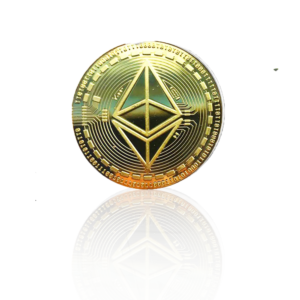
- Ethereum
- Ripple
- Litecoin
- Monero
- Zcash
- Dash
- Stellar
- EOS
- IOTA
Bitcoin
A decentralized cryptocurrency network that allows transactions between two peers without requiring third party involvement. Each node maintains a copy of all transaction data and stores a complete history of the blockchain. Transactions are verified by miners who create blocks containing transactions and add them to the blockchain. Mining rewards nodes with newly created coins.
Bitcoin is known for being secure, anonymous, and cheap. These three qualities alone have made Bitcoin extremely popular. Although Bitcoin is becoming increasingly accepted worldwide, its global adoption is limited due to slow confirmation times and high fees, which can reach tens of dollars per transaction. To solve these issues, many startups have been working on developing alternative solutions.
Ethereum
Created by Vitalik Buterin and released in 2015, Ethereum is a platform that aims to operate without the need for a centralized governing body. Rather than relying on a single entity to manage transactions, Ethereum enables users to take responsibility for their personal finances and investments.
Unlike traditional blockchains, Ethereum uses smart contracts to execute code specified by the creator (the user) of the contract. Smart contracts can enforce conditions on financial transfers, automatically trigger payments, and even vote on whether to accept a deal.
Ethereum has grown significantly since release, but it’s still not yet widely adopted as a means of exchange. There are concerns about security, governance, and scalability. Some believe Ethereum itself may simply be too complicated for mainstream users.
Ripple
Like Etheruem, Ripple is a decentralized cryptocurrency designed to eliminate the middleman. With Ripple, banks use XRP tokens to send money across borders cheaply and reliably. Banks can choose to do business directly with each other instead of going through intermediaries such as SWIFT.
XRP is often compared to Bitcoin, and shares similar traits including encryption and decentralization. Unlike Bitcoin, however, XRP lacks proof-of-work consensus algorithms, making mining unnecessary for validation. XRP is considered faster and cheaper than Bitcoin because of the large reduction in transaction fees.
Ripple is largely focused on remittance payments, but the company recently announced plans to launch a trading platform.
Litecoin
Released in 2011, Litecoin is an open source currency protocol that includes its own distributed ledger, allowing for rapid verification of transactions. Unlike bitcoin, it doesn’t rely on proof-of-work mining.
Its name comes from the amount of computer power required to mine a full coin versus bitcoin, which requires far less processing time.
Monero
Founded in 2014, Monero is another privacy oriented cryptocurrency with a focus on anonymity. Users can remain private while utilizing the platform. Like Dash, transactions aren’t public. Instead, only balances are shown. All addresses are pseudonymous.
Monero differs from Bitcoin in that it doesn’t utilize a public ledger. Its privacy features allow users to maintain their anonymity by hiding their IP addresses, timestamps, and amounts sent using ring signatures.
Monero is primarily targeted toward those seeking to hide criminal activity online.
Zcash (ZEC)
Zcash is an open-source cryptographic protocol that allows users to send and secure communications and transact via public and private keys. Originally founded in 2014, Zcash is a fork of Bitcoin (BTC) created by Zooko Wilcox O’Hearn. Unlike BTC, however, Zcash was built with privacy and security in mind.
As mentioned earlier, cryptocurrencies offer a way for individuals to easily transfer funds around the globe without having to worry about banks or third parties. Because of this, Zcash was designed to be anonymous. All transactions made using Zcash are pseudonymous and untraceable due to the use of shielded addresses. These addresses allow the sender and recipient of an address to remain hidden while sending payments.
For instance, if Alice sends Bob 100 ZEC, she would generate a unique address that matches her name and Bob’s name, thereby preventing anyone from tracing the transaction back to either party. Once Alice confirms the transaction, she destroys the key pair used to encrypt the original message, meaning that even if law enforcement wanted to trace the transaction, the original data would be destroyed.
While Zcash is currently one of the best performing cryptocurrencies, it is still facing stiff competition from older players such as Monero (XMR). Despite not offering anonymity features, XMR still holds a strong market share due to the fact that it offers low fees and fast transactions.
Dash (DASH)
Created in January 2014 by Evan Duffield as Decentralized Autonomous Organization (DAO), Dash is known as a quick solution for remittance transactions. Since its creation, DASH has grown rapidly and now boasts over 13 million active wallets.
One of Dash’s major selling points is its instant transactions. Compared to peer-to-peer networks such as bitcoin and litecoin, DASH offers two times faster confirmations. Furthermore, unlike traditional exchanges, Dash requires no middlemen to facilitate trades. Users need only download the Dash client to complete purchases. The simplicity of Dash is why so many merchants accept the network.
Another feature that sets Dash apart is its decentralized governance system. While previous projects relied solely on founders and developers, Dash introduced a self-governing structure whereby miners play a crucial role in determining future changes to the network.
Dash’s recent developments have given it a leg up against competitors such as Ripple and Litecoin. Whereas Ripple focuses primarily on cross border payments solutions, Dash aims to become the backbone of everyday commerce. Its current price of $300 makes Dash a potentially lucrative investment opportunity for long term growth.
Stellar (XLM)
Stellar is another leading digital asset focused towards facilitating financial inclusion and developing world-class infrastructure. Launched in 2014, Stellar started off as a project developed by Jed McCaleb and Joyce Kim. Known as Open Financial Network (OFFIN), Stellar quickly became a leader in providing cheap and efficient banking solutions to emerging markets.
Unlike most cryptocurrencies, Stellar operates on a consensus model where participants work together to maintain a shared database that keeps track of balances and transfers. To achieve this, Stellar relies on a distributed network of servers to store data and run calculations. In addition to serving as a global bank, Stellar also provides a mobile app and API to enable businesses and individuals to gain access to finances worldwide.
Because of its reliance on a centralized database, Stellar is vulnerable to hacks. Due to this risk, regulators quickly banned the implementation of such systems in countries including China, India, Russia, Japan, South Korea and Singapore. Nonetheless, Stellar remains highly popular throughout Africa, Latin America and Asia Pacific.
Another reason for the massive adoption of Stellar is because of its partnership with IBM. Through the collaboration, Stellar aims to bring affordable finance services to millions who lack access to credit cards or bank accounts.
Currently, XLM is ranked number six among cryptocurrencies based on market cap. Its price has remained stable compared to other top performers such as Ethereum, Ripple, NEM and NEO.
EOS (EOS)
Launched in June 2015, EOS is a blockchain framework that has been optimized to deliver scalable performance. EOS was created by Dan Larimer through Block.one, his startup incubator. Before launching EOS, Larimer spent over ten years working on Bitcoin Core, a software program that powers blockchain protocols like Bitcoin Cash (BCH).
IOTA
IOTA is an upcoming cryptocurrency project founded by David Sønstebø in 2015.
David Sønstebo worked for Microsoft as a developer until he left to found his own venture called IOTA Foundation. He claims the main reason why he started the foundation was because he felt disappointed by the way that big companies behave. Big companies spend huge sums of money to promote themselves, but don’t care much about the actual development process.
-
 This product has multiple variants. The options may be chosen on the product page
Basketball Rib Shorts (AOP)
$39.80 -
 This product has multiple variants. The options may be chosen on the product page
Basketball Rib Shorts (AOP)
$39.80 -
 This product has multiple variants. The options may be chosen on the product page
Basketball Shorts
$38.55
SERP
- Pages that search results are linking to (excluding internal links):spectrum.ieee.org
- Why Modeling the Spread of COVID-19 Is So Damn Hard
- The Big Problem With Self-Driving Cars Is People
SERP
-
These Are The TOP 10 AI Cryptocurrencies That Might Change The World – Artificial Intelligence (AI) is the main moving power, that will help human civilization to excel to new heights in the future. AI is powering our technology enabling us not just to create new things, but also to improve everything that exists. Wiki (laconicml.com)
-
14 Ways Technology Will Affect the Future of Customer Service – Read our customer service technology predictions to learn how innovation will change the face of our industry. (blog.hubspot.com)
-
How blockchains could change the world – Ignore Bitcoin’s challenges. In this interview, Don Tapscott explains why blockchains, the technology underpinning the cryptocurrency, have the potential to revolutionize the world economy. (mckinsey.com)
-
How artificial intelligence is transforming the world – Darrell West and John Allen examine the societal and political aspects of developing artificial intelligence technologies. (brookings.edu)
-
Gartner Top Strategic Predictions For 2020 And Beyond – Gartner’s 2020 strategic predictions examine how technology—from AI to cryptocurrency and online shopping—is changing how we live and how CIOs can adapt. (gartner.com)
-
Bloomberg – Are you a robot? (bloomberg.com)
-
The Essential Eight technologies – Eight emerging technology trends and six convergence themes you need to know about in order to deliver even greater business value. (pwc.com)
-
“Next Big Thing” in Technology: 20 Invention that will Change the World – This should however not stop us from aiming to better understand the future of technology : the knowledge gained through planning, read more. (resources.experfy.com)
-
3 ways AI will change the nature of cyber attacks – Cyber attacks are one of most significant risks facing the world today – and thanks to AI, they are about to become far more powerful. Here’s a guide to these new threats – and how we can also use AI to fight back (weforum.org)
-
6 Practical Examples Of How Quantum Computing Will Change Our World – Quantum computers promise to push computing to new levels and with it brig new innovations and transform many industries. Here we look at practical examples of how quantum computing could change our world. (forbes.com)
-
AI, Robotics, and the Future of Jobs | Pew Research Center – Experts envision automation and intelligent digital agents permeating vast areas of our work and personal lives by 2025, but they are divided on whether these advances will displace more jobs than they create. (pewresearch.org)
-
(analyticsinsight.net)
-
How Will Blockchain Change The World? – 101 Blockchains – How will blockchain change the world? Almost everyone around us is sure that blockchain technology is here to change the world. In this article, we will (101blockchains.com)
-
The Metaverse in 2040 – Experts are split about the likely evolution of a truly immersive “metaverse.” They expect that augmented- and mixed-reality enhancements will become more useful in people’s daily lives. Many worry that current online problems may be magnified if… (pewresearch.org)
-
The Truth About Blockchain – Contracts, transactions, and records of them provide critical structure in our economic system, but they haven’t kept up with the world’s digital transformation. They’re like rush-hour gridlock trapping a Formula 1 race car. Blockchain promises to so (hbr.org)
-
17 Fintech Trends You Should Know About: The Ultimate Guide | FinTech Magazine – The future of fintech looks bright, with AI, robotic process automation, smart contracts, DeFi, and virtual reality all on the rise (fintechmagazine.com)
-
GlobalTrends_2040.pdf – IN COMING YEARS AND DECADES, THE WORLD WILL FACE MORE … cluding climate change, disease, financial … intelligence (AI) will have expanded economic. (dni.gov)
-
(analyticsinsight.net)
-
The Artificial Intelligence Revolution: Part 1 – Wait But Why – Part 1 of 2: “The Road to Superintelligence”. Artificial Intelligence — the topic everyone in the world should be talking about. (waitbutwhy.com)
-
The role of artificial intelligence in achieving the Sustainable Development Goals | Nature Communications – The emergence of artificial intelligence (AI) and its progressively wider impact on many sectors requires an assessment of its effect on the achievement of the Sustainable Development Goals. Using a consensus-based expert elicitation process, we find (nature.com)
Sorry, the comment form is closed at this time.